
Big News for the Digital Shack: FT2 Officially Joins the ADIF Family
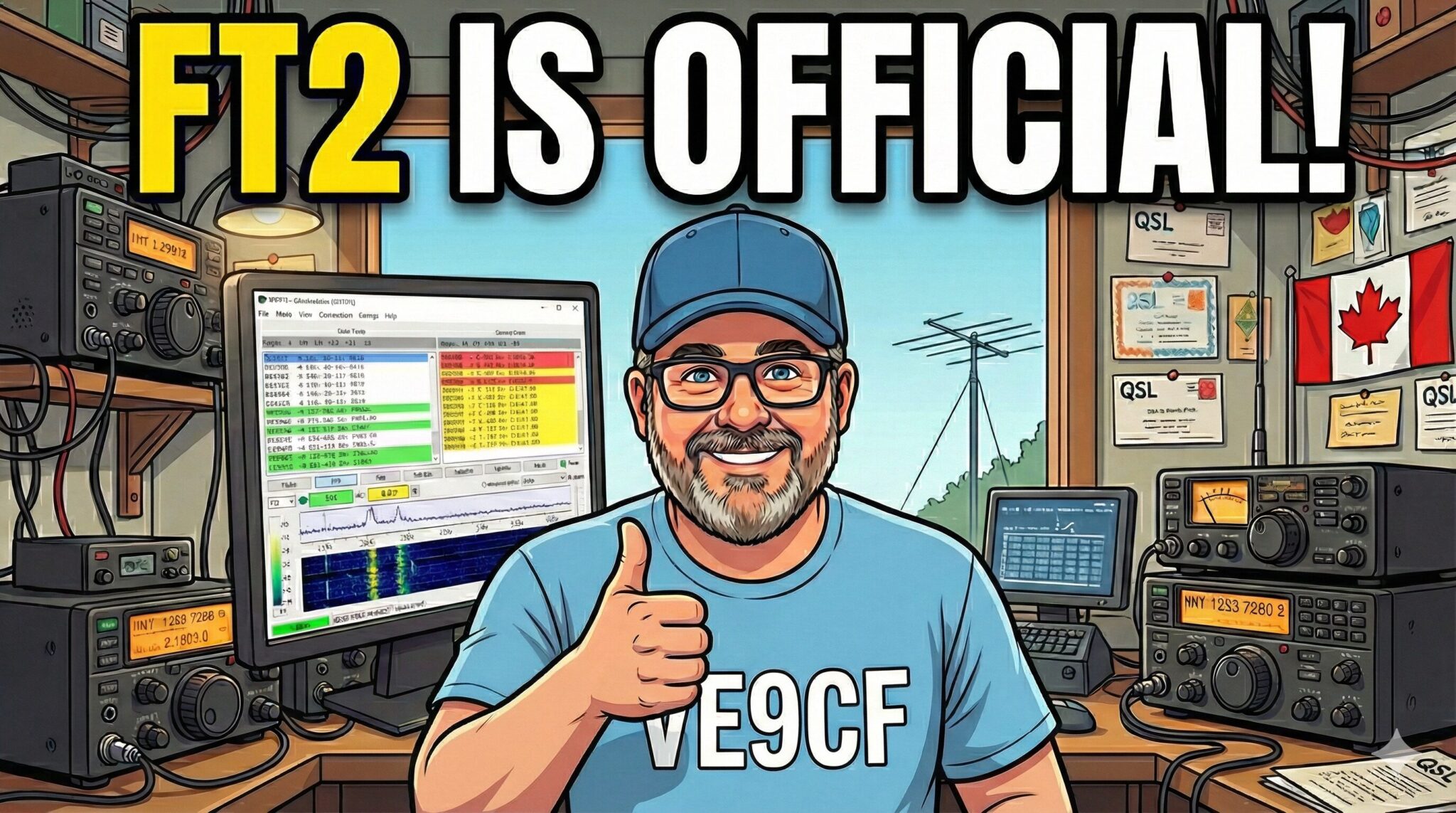
Pour yourself a fresh coffee and pull up a chair, because I’ve been biting my tongue for a little while now, waiting for the ink to dry on some very significant paperwork in the amateur radio world. Today, I am absolutely thrilled to share some monumental news for all my fellow digital mode enthusiasts: the ADIF Development Group has officially accepted FT2 for inclusion in the Amateur Data Interchange Format (ADIF) Specification.
For those of us who have been "Out N' Aboot" experimenting with this mode in its early beta stages, this is the exact moment we’ve been waiting for. This isn't just a minor technical footnote; it’s the formal "green light" that elevates FT2 from a quirky experimental endeavour to a globally recognized standard.
The Significance of the ADIF Development Group Acceptance
If you’ve ever tried to shuttle your logs between different software packages—say, exporting from WSJT-X or JTDX over to your primary station logger, or uploading to a contest site—you already know that ADIF is the essential glue holding our digital lives together. Without official ADIF recognition, a mode essentially exists in a vacuum. You can make the contacts, but you can’t easily prove them, track them, or use them for awards.
The ADIF Development Group serves as the gatekeeper of these vital data standards. By officially accepting FT2 into the specification, they are ensuring that every logging software developer on the planet now has the exact blueprint they need to seamlessly support our QSOs. It means that "FT2" is no longer just a random string of characters we have to manually force into a comment field; it is now a formal piece of metadata that the world’s amateur radio infrastructure inherently understands.
The Two-Week Countdown to Formal Certification
The best part of this announcement is that it isn't just a vague "maybe"—it’s a definitive "when." The ADIF Development Group has confirmed that within the next two weeks, FT2 will be formally certified as a recognized digital mode.
This short two-week window is essentially the final administrative lap. Once that certification is officially published, the floodgates will open. We can expect to see software updates rolling out for popular logging programs like N1MM+, Log4OM, and Ham Radio Deluxe almost immediately. Seeing our digital landscape evolve and adapt this quickly is nothing short of incredible, and it's a massive testament to the hard labour of the developers who have been refining the FT2 protocol for prime time.
Paving the Way for Logbook of The World (LoTW)
Perhaps the most exciting ripple effect of this news is what it means for the ARRL’s Logbook of the World. For a vast majority of us, the quest for major awards like DXCC, WAS, or VUCC is a primary driving force in the shack. Up until now, FT2 contacts were strictly "off the books" as far as LoTW was concerned.
Because ADIF acceptance is a strict prerequisite for LoTW integration, the path is now completely cleared. Once the ADIF spec is updated and the final certification drops, the ARRL can begin the process of adding FT2 to the TQSL configuration files. This means that very soon, those hard-earned, long-haul FT2 contacts you’ve been stashing away will finally count toward your wallpaper. I know I’ll be first in line to upload my backlog the moment that dreaded "Mode Not Recognized" error disappears!
Why FT2 Matters to the Modern Operator
You might legitimately be asking, "Why on earth do we need another mode when FT8 and FT4 are already so dominant?" In my experience, FT2 offers a fantastic middle ground that fills a very specific, much-needed niche. While FT8 is the undisputed king of deep-fading weak-signal work, and FT4 is built purely for contest speed, FT2 brings a unique set of technical efficiencies to the table.
I find it particularly useful when band conditions are acting a bit "Canadian." Operating out of New Brunswick (VE9), I deal with my fair share of auroral flutter, rapid QSB, and unpredictable polar paths. FT2 cuts through that northern noise beautifully, making it a genuine joy to operate when the ionosphere refuses to cooperate.
Final Thoughts from VE9CF
This is a profoundly proud day for the software developers and the early adopters who recognized the potential in FT2 from day one. It’s a wonderful reminder that amateur radio is a living, breathing hobby that continues to innovate and push the boundaries of digital communication.
I’ll be keeping my eyes glued to the ADIF website over the next fortnight. Once that formal certification goes live, you can bet I’ll be back here on the blog with a step-by-step guide on how to update your station to make sure every FT2 contact is properly logged, verified, and celebrated.
Until then, I hope to see you on the waterfall. 73 for now, and I’ll catch you further down the log!